Breathwork is everywhere right now. Scroll any social feed and you’ll find live-streamed sessions promising breakthroughs, emotional release and “psychedelic-like” journeys, often with hundreds of people breathing hard in front of their laptops at once.
A new brain-imaging study, presented in October 2026, shows just how powerful intensive breathing is. Fast, deep, sustained breathing cut blood flow to the brain by around 45% and changed how key brain networks communicate. For experienced practitioners in a research setting, that produced profound altered states. For a stranger alone at home on a video call, with no screening and no one in the room, it’s a very different situation.
At Still Mountain, breathwork is at the heart of many of our retreats, and we love what it can do. That’s exactly why we want to be clear about the difference between gentle, regulating breathwork and intensive, holotropic-style breathing, and why we don’t recommend the intensive kind without in-person screening and trained support.
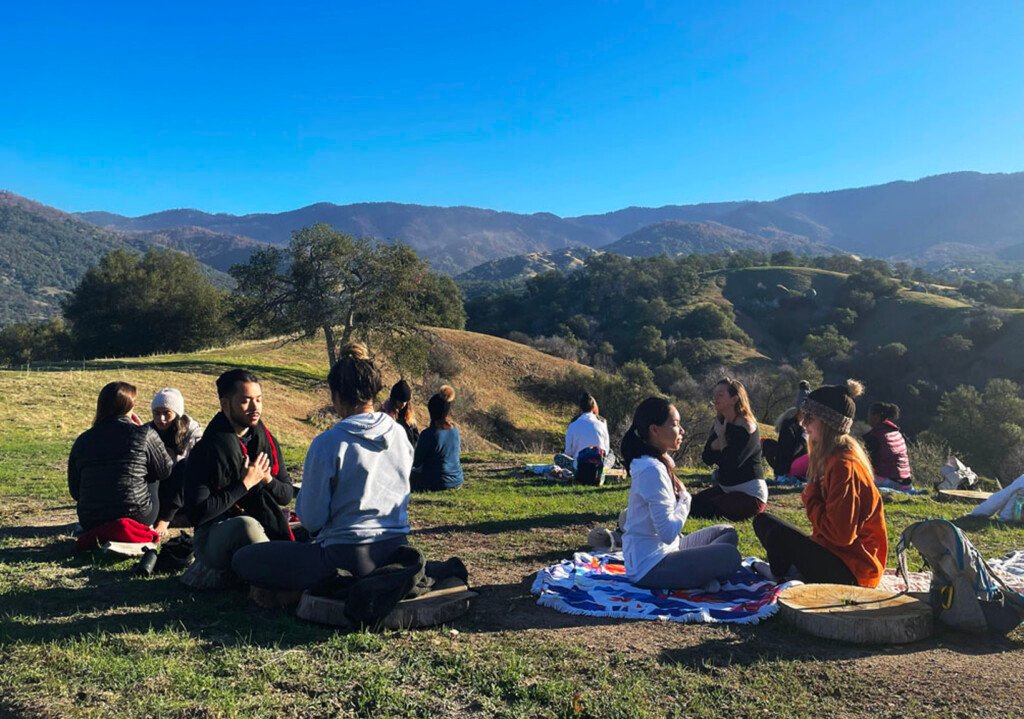
What the new study found
Researchers at the Central Institute of Mental Health in Mannheim, Germany, scanned the brains of 30 healthy, experienced breathwork practitioners while they did high-ventilation breathwork inside an MRI machine.
- Blood flow to the brain dropped sharply. Grey-matter blood flow fell by about 45% on average during the session.
- People entered strong altered states. Participants described a deep “oceanic” feeling of connection, which they compared to a moderate-to-high dose of LSD or psilocybin, with fewer visual effects.
- Brain networks changed how they communicate. The strongest experiences matched the biggest changes in the default mode network, the part of the brain involved in self-reflection and your sense of self.
The researchers were careful to call their findings preliminary. It was a small study, with no control group, made up only of experienced practitioners. An independent expert noted it needs repeating with beginners in a controlled trial.
But one point is already clear: intensive breathwork is not a gentle relaxation exercise. It changes brain blood flow and brain function enough to produce psychedelic-like states. That deserves the same respect, screening and support as any other powerful intervention.
What happens in your body during intensive breathwork
Holotropic and similar “conscious connected” styles ask you to breathe faster and deeper than your body needs, usually for a long time. This is, in medical terms, sustained hyperventilation. Here’s what follows:
- Carbon dioxide drops. You breathe out CO₂ faster than your body makes it. CO₂ isn’t just waste; it helps regulate your blood’s chemistry and blood flow.
- Blood vessels in the brain narrow. Low CO₂ makes brain blood vessels constrict, which is why blood flow falls. This is the 45% drop the new study measured.
- Your body chemistry shifts. Blood becomes more alkaline, which changes how nerves and muscles fire. This causes the familiar tingling, numbness, and cramping or clenching of the hands, feet and face that facilitators often describe as “energy moving.”
- Dizziness and fainting become possible. Lightheadedness, a racing heart, chest tightness and, in some people, loss of consciousness can follow.
- The mind changes too. As brain networks shift, people can experience intense emotion, vivid imagery, a dissolving sense of self, or the resurfacing of painful memories.
None of this means intensive breathwork is always harmful. It means it is a strong physiological and psychological intervention, and the risks depend heavily on who is doing it and who is there to help.
Why online and large-group sessions add risk
Holotropic Breathwork was developed by psychiatrist Stanislav Grof and his wife Christina Grof as an in-person practice. In the original format, participants are prepared and screened beforehand, sessions run for about three hours, each breather has a dedicated “sitter” beside them, trained facilitators support the room, and the day ends with drawing and group sharing to integrate the experience. Grof Transpersonal Training, which certifies Holotropic Breathwork facilitators, states that running intensive sessions online, or letting people with serious contraindications take part, goes against the method’s safety standards. Much of today’s online breathwork keeps the intensity but drops those safeguards:
- No screening. Anyone who clicks a link can join, including people with heart conditions, seizure disorders, pregnancy or serious mental health conditions.
- No one in the room. If you faint, fall, panic, or become disoriented, the facilitator may not notice. Even if they do, they can’t reach you.
- Too many people to watch. A facilitator can’t meaningfully track hundreds, or even dozens, of small video squares, many with cameras off.
- No time to come back down. Sessions often end when the stream ends. Strong emotions or unsettling memories can surface with no one to help you make sense of them afterwards.
- Unclear training. “Holotropic” and “breathwork” are used loosely online. A large following is not the same as clinical training or a certified facilitator.
- Risky settings. People join from bathtubs, cars, beds and pools. Fainting in water can be fatal.
Who should not do intensive breathwork
Talk to your doctor before trying any intensive or rapid breathing practice. It is generally not advised if you have or have had:
- Heart disease, heart rhythm problems or high blood pressure
- A history of stroke, aneurysm or seizures (epilepsy)
- Glaucoma or a detached retina
- Pregnancy
- Recent surgery or injury
- Severe asthma or other breathing conditions
- Psychosis, bipolar disorder, severe depression or a history of psychiatric hospitalization
- Recent trauma, or PTSD you’re not currently working on with a therapist
- Any medication or condition your doctor has said affects your heart, blood pressure or brain
This list isn’t complete, and only a medical professional can advise on your situation. When in doubt, choose gentle, slow breathing instead.
How breathwork at Still Mountain is different
Our breathwork is designed to calm the nervous system, not overwhelm it. Instead of pushing the breath faster and harder, we teach slow, steady, rhythmic breathing that helps your body shift out of stress mode, improves sleep, and gives you a practice you can safely use at home every day.
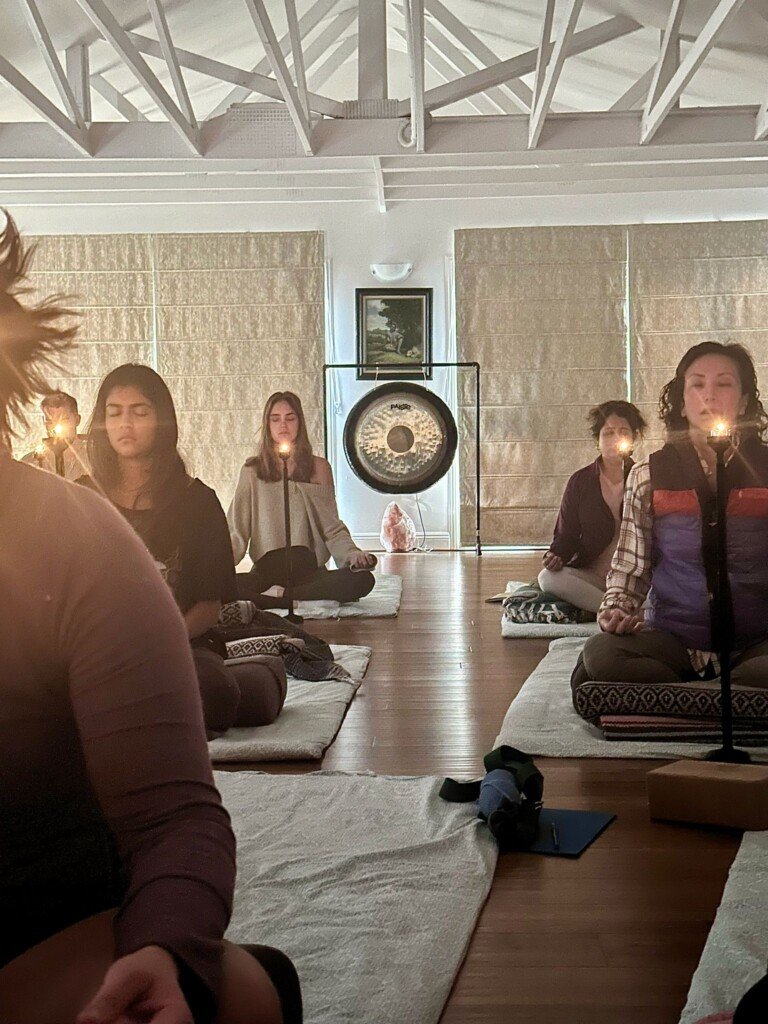
- In person, in groups of 10 to 18. Our teachers can see you, guide you and adjust the practice to you. Groups are small enough that no one gets lost in the crowd.
- Screening before you arrive. Every guest completes an intake form covering health conditions, medications, mental and emotional health history, and an emergency contact. Our teachers review each form before the retreat and explain the contraindications for every breathing practice before it’s taught, so you always know what’s right for you.
- Gentle, regulating techniques. Slow, extended exhales, nasal breathing and breath awareness, rather than sustained rapid breathing.
- Time to integrate. Practice sits alongside rest, nourishing plant-based meals, time in nature and conversation, so nothing is left hanging when a session ends.
- A place made for it. 240 acres of quiet land in California’s Southern Sierra Nevada, near Sequoia National Forest, with no screens required.
Our goal isn’t a dramatic experience. It’s a calmer nervous system you can take home.
Frequently asked questions
Is all breathwork dangerous? No. Slow, gentle breathing practices are widely used to reduce stress and are generally considered safe for most people. A 2023 review of 12 randomized trials found breathwork may help lower stress, though its authors cautioned against hype. The concern is with intensive, rapid breathing done for long periods, especially without screening or in-person support.
What is holotropic breathwork? It’s an intensive breathing method developed by Stanislav and Christina Grof, combining fast, deep breathing with loud music to bring on altered states of consciousness. It was designed as an in-person practice with screening and trained support. Many online sessions today use similar techniques without those safeguards.
Why does fast breathing make my hands tingle or cramp? Breathing faster than your body needs lowers the carbon dioxide in your blood. That shifts your blood chemistry and makes nerves and muscles more excitable, causing tingling, numbness and cramping. It’s a sign of hyperventilation, not “energy release.”
Is the psychedelic-like feeling a good sign? Not necessarily. The new study links these experiences to a large drop in blood flow to the brain and changes in brain network activity. Some people find them meaningful, but they are a sign of a strong effect on the brain and should be approached with care.
Is it safe to do intensive breathwork in an online class? We don’t recommend it. Online sessions usually lack screening, no one can reach you if you faint or panic, and facilitators can’t watch large groups closely. If you choose intensive breathwork, do it in person with a trained facilitator who has screened you first.
Can breathwork bring up trauma? Yes. Intensive breathing can surface strong emotions and painful memories. Without skilled support and time to process afterwards, this can leave people feeling overwhelmed or destabilized. If you have a trauma history, talk to your therapist before trying it.
Can I do breathwork in the bath, a pool or the ocean? Never do intensive breathing or breath-holding in or near water. If you faint, you can drown. This applies to bathtubs too.
What kind of breathing is better for stress and sleep? Slow, steady breathing with a longer exhale than inhale, ideally through the nose, helps signal safety to your nervous system. A few minutes a day, practiced consistently, often does more than one dramatic session.
What should I ask a breathwork facilitator before a session? Ask about their training, whether they screen participants for health conditions, how many people they support at once, what happens if someone faints or panics, and what support is available afterwards. If they can’t answer clearly, look elsewhere.
What breathwork do you teach at Still Mountain? Gentle, regulating breathwork for stress, sleep and nervous system reset, taught in person by experienced teachers on our retreats. See our upcoming breathwork retreats.
About the author
Deepak Swarup is the founder of Still Mountain Wellness Retreat. He has practiced for over 36 years and taught breathwork under the guidance of his teacher for over 12 years.
Sources
- News-Medical, “Intensive breathwork reduces brain blood flow and alters neural communication,” October 11, 2026, reporting research by Dr Christian Schmitz and colleagues, Central Institute of Mental Health, Mannheim, presented at the ECNP Congress in Munich. news-medical.net
- Fincham, G. W. et al. (2023), “Effect of breathwork on stress and mental health: A meta-analysis of randomised-controlled trials,” Scientific Reports. nature.com
- Grof Transpersonal Training, “What is and is not Holotropic Breathwork®,” by Tomek Kwieciński, on the method’s full structure and why intensive online sessions and unscreened participants go against its safety standards. holotropic.com
- Stanislav and Christina Grof, “Principles of Holotropic Breathwork” (PDF, Grof Transpersonal Training), noting that physical and emotional contraindications are discussed with participants and expert assessment is obtained when there are concerns. holotropic.com
- MedlinePlus Medical Encyclopedia, “Hyperventilation,” U.S. National Library of Medicine. medlineplus.gov
- Wim Hof Method, “What Is Shallow Water Blackout?”, warning never to practice deep breathing before or during immersion in water, or while driving. wimhofmethod.com
- CapRadio, “Breath-holding, meditation leads to two drowning deaths,” July 28, 2017. capradio.org
This article is for general information only and isn’t medical advice. Please talk to your doctor before starting any breathwork practice, especially if you have a health condition.